
Inguinal hernia
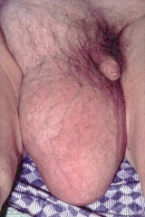
Inguinal herniae may be direct, indirect or both.
A hernia may be managed conservatively if:
-
It is small and asymptomatic.
-
It has a wide neck and unlikely to obstruct or strangulate.
-
Patient is unfit for surgery – the risks of undergoing surgery outweigh the benefits of preventing potential complications of the hernia.
Operative management
Herniotomy involves excision of the sac and closure of the neck and is usually only performed in children.
Herniorrhaphy involves a reconstruction to:
-
Restore the anatomical defect
-
Increase the strength of the abdominal wall
-
Construct a barrier to recurrence
Herniorrhaphy can be achieved by the following techniques:
-
Open repair
-
Darn
-
Shouldice
-
Lichtenstein
-
Laparoscopic repair
Laparoscopic hernia repair was previously reserved for bilateral or recurrent hernia, however, it is now recommended as one of the treatment options for unilateral hernia, given that it is performed by appropriately trained surgeons who regularly carry out the procedure (NICE 2004).
It can be performed from within the peritoneal cavity (transabdominal preperitoneal repair: TAP) or extraperitoneally (totally extraperitoneal repair: TEP)